
|
 |
| Home Vedic Venue eMagazine Current FAQs Contact Us Links |
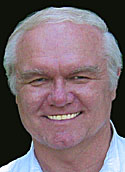
February's "Star" of the Month |
A Conversation with Astrologer William R. LevacyBy Editor Christina CollinsInterview Date: 02/02/11 Jyotish Star: Where did you get your start in Vedic Astrology?
Jyotish Star: Are you a consulting astrologer, a scholar or writer, or a teacher � or all four? Bill: I am interested in just about every aspect of Vedic astrology. After I started studying in 1983, as I mentioned, it became clear to me that the information on Vedic astrology available in the various books or shastras could be computerized to extract data and make a report. About six months after I started Jyotish, I began development of a Vedic Astrology interpretation program. I met some aerospace engineers and we worked together to design a software program. It turned out to be an amazing learning tool for me. I felt that after just a couple of years using this tool and doing as many charts as I could, that I advanced my practice by many years through the �magic� of computing technology. Jyotish Star: Who inspired you, mentored you, or has been your strongest support along the way?
Jyotish Star: What Jyotish Books have you found most helpful for students of Vedic Astrology? Bill: One of my favorites is Satya Jatakam by Sage Satyacharya. I also enjoy R. Santanam�s translation of Parasara Hora Sara. There is so much more in Parasara that is not being used today. I hope more programmers can bring out the complex calculations so that these advanced techniques can be used by the Western world. Jyotish Star: Please tell us a little bit about your own Astrology book(s), and are there more in the planning?
I�m working on a fourth book right now. I am about half done. It is on the topic of relationships. I�m in the middle of finishing my dissertation for a PhD in Education. I should have that done by next fall, then I can devote more time to this book. Vedic Astrology and Relationships will be my topic in 2012 at the United Astrology Conference (UAC) in New Orleans. Another project I am working on is that over the years I have learned several techniques that enhance brain functioning in order to increase skills as an astrologer. I learned several of these from Maharishi. One of my favorites is an old Buddhist technique that is a build on a technique originally developed by Patanjali. I�ll probably teach a workshop on these techniques in a couple of years. Jyotish Star: How long have you been a Vedic Astrologer? Bill: I started the study of Vedic astrology when I was an embryo. My mother was reading horoscopes in the newspaper each day, and I guess I just got hooked from there! I don�t read the paper anymore because I am allergic to the ink, but I still do a lot of chart interpretations and hope to continue to do so for many years to come (I can�t say exactly how many years, because I am working with an Ayurvedic doctor on becoming immortal right now�.I let you know how it turns out!). Jyotish Star: Do you have any conferences or events coming up? Bill: I will be speaking at the Mosha Festival in Los Angeles in the fall. There will be announcements coming out about this. I will be speaking on Jyotish in general and I will be giving a lecture on Vastu. Jyotish Star: Did you have an Indian influence, spiritual teacher, or mentor that attracted you to Jyotish? Bill: As I mentioned earlier, I first heard about Jyotish in 1977 from Maharishi. The next time I heard about it was again from Maharishi in 1982 when Maharishi starting introducing Ayurveda to the West. Maharishi said that in order to attain and maintain optimal health, one needed to know about the cycles of life. The idea was to avert a danger before it come up. This is basically prevention. In India they say if you want to get rid of a snake, get rid of it when it is really small. The best way to get out of trouble is not to get into it to start with. Jyotish Star: What advice would you give to the beginner, just starting their studies in this field? Bill: I wrote an article for Modern Astrology�s 2011 Annual issue. It was on the topic of �Consciousness and the Astrologer.� In my view, it is one�s cognitive ability, that is consciousness, as well as experience that makes for a good astrologer. My advice to beginners is to enjoy your enthusiasm for the topic, do lots of charts and don�t try to hard to understand. The answers will come in time. Jyotish is the science of time, so enjoy your time and time will tell. Jyotish Star: Do you think that someone needs to be a Hindu, or needs to have lived in India to be a Vedic Astrologer?
Jyotish Star: How long does it take to learn Jyotish? Bill: Just like anything it is a matter of will, interest and capacity. A person can come to the well with a thimble, a cup, or a bucket. This is why the development of consciousness is so important. The expansion of awareness is directly correlation to the advancement of Jyotish skills. Jyotish Star: How do you think people can benefit from going to a Jyotish Astrologer? Bill: People generally come to an astrologer because they want direction. They don�t necessarily want to follow it, but they want to know what might be going on�. and people want to be comforted. They want to know that everything will work out somehow (it generally does). So the astrologer is like a lighthouse and a friend. Jyotish shows a person how to anticipate the approach of a special time in order to prepare for it properly (for the good or bad). I think that destiny is negotiable and Jyotish helps us to become smarter than our karma. We all are what we�ve done, but what we do is what we become. Jyotish can help us become more. Jyotish Star: Do you think there is a thirteenth sign in the Zodiac? Bill: In descriptive astronomy, the sky is divided into 12 sections so that sky watchers can describe what part of the sky they found something in. Even today, telescopes are pointed using 12 constellations as sky markers. If you really wanted to look, you could even find more than thirteen. I think all we need is twelve. This flap about the 13th constellation comes up every few years by some astronomer who is feeling a bit mischievous and wants to stir things up. If these astronomers spent a bit more time studying the tenets of Vedic astrology, they would find that the Vedic system is not so far off the mark as to what an astronomer would use to describe the sky. Jyotish Star: What is your opinion on 2012? Bill: There is no significant Jyotish event centered on the 2012 equinox. It is interesting that the start of Kali Yuga and the start of the Mayan long count calendar began within a dozen years or so of each other. It is interesting that the originator of Vedic architecture was a rishi named Maya. It is also fascinating to see the domed statues of the Olmecs, the precursors of the Mayans. These ten ton Olmec sculptures have facial features that resemble South Indian physiology. But other than some compelling parallels between Indian and Mayan culture, I think people will wake up yawning (but happy) in December, 2012. Biography: William Levacy holds a BA in Literature, a Masters in the Science of Creative Intelligence, and another Masters in Education with a specialization in e-Learning. Bill is currently a PhD Candidate in Education with a specialization in Human Performance Improvement (HPI) at Capella University. Bill has had a very busy Vedic Astrology practice since 1983 with clients from around the world. In 1996 he was awarded the prestigious title of "Jyotish Kovid," (Expert in Vedic Astrology) by the International Council of Astrological Sciences (ICAS) in Bangalore, India. Bill has appeared on television, including an Astrology Special on The Learning Channel (TLC) which has aired in the US, Europe, Asia, and the Middle East. Bill is the author of three books on Vedic astrology, "Beneath a Vedic Sky," "Beneath a Vedic Sun," and his latest illustrated work "Vedic Astrology Simply Put." He teaches work-shops on Vedic Astrology around the US, Europe and India and is President of the American College of Vedic Astrology (ACVA), and its online educational program at www.acvaonline.org. Bill's website is www.vedicastrologer.com. He can be reached at [email protected] |
 |
 |
 |
|
||
 |
|
 |
|
||

| Jyotish Star Copyright 2011 C. C. Collins - All Rights Reserved |